
How to Choose a Spinning Reel: A Practical Buying Guide
Working out how to choose a spinning reel is mostly an exercise in ignoring the box. Reel packaging is covered in numbers designed to win a shelf comparison: bearing counts, drag figures in kilograms, gear ratios quoted to one decimal place. Only a few of them change how the reel behaves with a fish on. This guide walks through the specs that matter, the ones that are inflated, and how to land on a size that fits the fishing you actually do.
Key takeaways
- Reel size is a line capacity number, and it is not standardised between brands.
- Drag smoothness beats maximum drag – you will never use the headline figure.
- Bearing count is the most inflated spec on the box. Position matters, quantity does not.
- Saltwater resistance is a manufacturer claim, not a certified standard.
Start with the water, not the reel
Three answers decide almost everything else: what species you target, what line you run, and whether you fish salt or fresh. A trout angler on a small stream and someone throwing bucktails for pike need reels that share almost nothing except the shape. Answer those three first and half the catalogue disappears. If you are still building out a kit, our fishing gear category is organised the same way – by what you are doing, not by brand.
Spinning reel size is a line capacity number in disguise
Spinning reels are sold by a number: 1000, 2500, 3000, 4000. That number is a rough class, not a measurement, and every spinning reel brand draws the line somewhere slightly different. Here is what each class generally covers.
- 1000 to 2000 – Ultralight. Around 2 to 6 lb mono, or 10 lb braid. Trout, panfish, small stream work.
- 2500 – The default first reel. 6 to 10 lb mono or 15 lb braid. Bass, walleye, general freshwater.
- 3000 – Same footprint as a 2500 with more capacity and slightly more cranking power. Larger bass, pike, light inshore.
- 4000 – Inshore saltwater, salmon, light surf. Comfortable with 15 to 20 lb braid.
- 5000 and up – Surf casting, big inshore species, heavy braid and long runs.
The important caveat: these sizes are not standardised. One brand’s 2500 can hold noticeably more line than another’s. Ignore the model number and read the line capacity printed on the spool or in the spec sheet. That is the only figure that means the same thing everywhere.
Spinning reel gear ratio: speed or torque
A spinning reel gear ratio tells you how many times the rotor turns for one turn of the handle. A 6.2:1 reel wraps line 6.2 times per crank. Faster ratios pick up slack quickly and suit lures you work fast. Slower ratios give you more torque for cranking a heavy fish or a deep-diving lure. Between 5.2:1 and 6.0:1 covers most freshwater fishing without committing you to either extreme.
There is a catch nobody prints on the box. Gear ratio alone does not tell you retrieve speed – spool diameter does. A 6.2:1 ratio on a 1000 size reel pulls in less line per turn than a 5.2:1 on a 4000. The honest number is inches per turn (IPT), and better manufacturers publish it. If two reels quote the same ratio but different IPT, trust the IPT.
Drag is the part that actually loses fish
Every spinning reel advertises a maximum drag figure. It is close to irrelevant. A reel rated at 22 lb of drag spooled with 15 lb line will never see more than about 5 lb in use, because the standard is to set drag at 20 to 30 percent of the line’s breaking strength. Cranking it higher just means the line breaks instead of the drag slipping.
What matters is startup inertia – how much force it takes to make the drag begin to move. A drag that sticks for a fraction of a second and then releases is what snaps line on a sudden run. Smooth is worth more than strong. Carbon fibre drag washers hold up better than felt, and a sealed drag stack keeps grit and salt out of the one component where they do the most damage.
Bearings: why “10+1” tells you almost nothing
Bearing count is the single most inflated spec on a spinning reel box. The “+1” is the roller clutch that stops the handle turning backwards, so a “10+1” reel has ten actual ball bearings. Manufacturers pad the count with cheap bearings in places that do nothing, and some count plastic bushings as if they were bearings.
Three positions do the real work: the pinion gear, the spool shaft, and the line roller. The line roller bearing is the one worth paying for, because a roller that does not spin freely puts twist into your line on every retrieve. Four well-made shielded stainless bearings in the right places will outperform ten unshielded ones every time.
Spinning reel body material: graphite, aluminium or a mix
Graphite and composite spinning reel bodies are light and immune to corrosion, which is why budget and saltwater reels use them. The trade-off is flex. Under heavy drag pressure a graphite frame can twist enough to pull the gears slightly out of alignment, which you feel as a grinding handle. Aluminium bodies stay rigid under load and last longer, at the cost of weight and price.
Many reels now use a hybrid – aluminium main frame with a composite side plate or rotor. For freshwater under 15 lb line, graphite is genuinely fine. For anything where you expect sustained drag pressure, pay for the metal frame.
Saltwater resistance is a claim, not a standard
No independent body certifies a spinning reel as saltwater safe. The phrase means whatever the manufacturer decided it means. What you can check is the construction: a sealed or gasketed body, a sealed drag stack, shielded stainless bearings rather than plain steel, and an anodised aluminium spool.
Maintenance matters as much as the spec. Rinse with a light spray of fresh water, never a pressure hose – high pressure drives salt past the seals instead of removing it. Then dry it, loosen the drag, and store it. Be realistic: most reels under about 60 dollars will not survive a full inshore season without being opened up and re-greased.
Spool, line lay and the small stuff
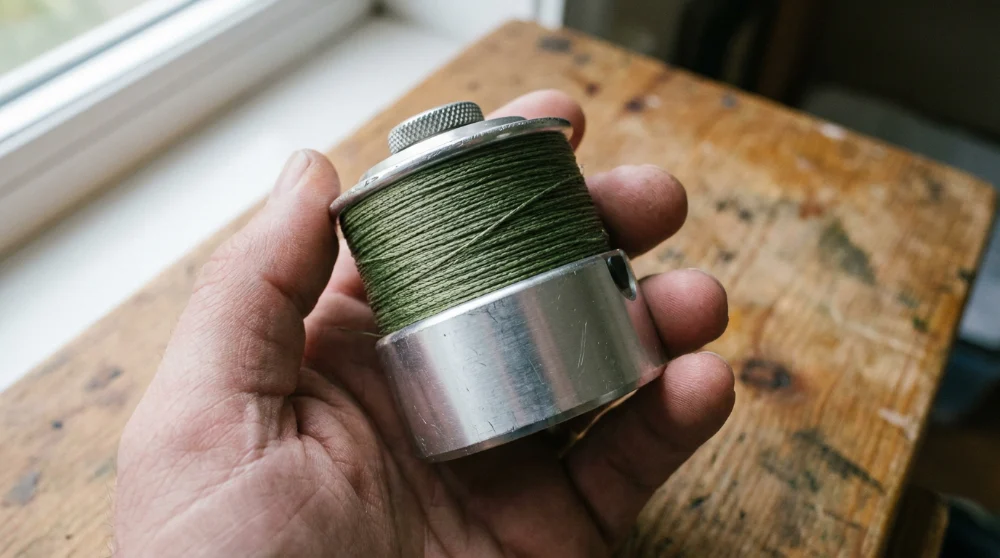
A braid-ready spinning reel spool has a rubber gasket at the base so braid does not slip against the metal, which saves you tying on a mono backing. Long-cast spool shapes – shallower and wider – shed line with less friction and add real distance. The oscillation system controls how evenly line stacks on the spool; uneven line lay is what causes wind knots on the cast. These are the details worth checking on the spec tab of any reel in our fishing collection before you commit.
Weight, handle and the feel test
Spinning reel weight only becomes obvious around hour four. If you cast repeatedly all day, 30 grams is a difference you will notice. A screw-in handle is more solid than a folding one and less likely to develop play. If you can, hold the reel on the rod you intend to pair it with – the balance point should sit at or just ahead of the reel seat, otherwise the rod feels tip-heavy no matter how good the reel is. The same balance logic applies to the rest of your carried gear: weight you barely notice at the truck is weight you resent by the afternoon.
Five mistakes that cost people reels
- Buying by bearing count. It is the spec most likely to be padded and least likely to reflect quality.
- Overfilling the spool. Line should stop about 2 mm below the lip. Any more and it jumps off in loops.
- Setting drag by feel at the reel. Pull line off the rod tip with the rod bent, the way a fish does, or use a scale.
- Pairing a reel that is too big for the rod. It kills casting feel and puts strain on the reel seat.
- Storing it wet with the drag tight. Compressed damp washers is how a smooth drag becomes a sticky one.
Matching the spinning reel to your rod
Rods list a recommended line rating and lure weight. Match the spinning reel size to the same line class and you will be close. As a rough guide: ultralight and light rods take 1000 to 2500, medium-light and medium rods take 2500 to 3000, and medium-heavy to heavy rods take 4000 and up. The same logic applies whichever discipline you are buying for – if you are also outfitting for the field, our trail camera buying guide uses the same approach of matching the tool to the job rather than to the spec sheet.
Frequently asked questions
What size spinning reel should a beginner buy?
A 2500. It casts light lures well enough for finesse work, holds enough line for most freshwater species, and pairs with the medium-light and medium rods that are easiest to learn on. If you already know you will be fishing inshore salt, start at 3000 or 4000 instead.
Do more bearings mean a better spinning reel?
No. Bearing quality and placement matter; quantity does not. A reel with six sealed stainless bearings in the pinion, spool shaft and line roller will feel smoother and last longer than one advertising eleven unsealed ones. Treat a high bearing count on a cheap reel as a warning sign rather than a feature.
Can I use a freshwater reel in saltwater?
Once or twice, if you rinse and dry the spinning reel thoroughly the same day. Repeatedly, no – unsealed bearings and unprotected gears corrode fast, and the damage is internal so you will not see it until the reel starts grinding. A correctly set drag also shortens the fight, which improves survival rates for fish you release; NOAA publishes catch and release best practices worth reading before your first saltwater trip.
How often should a spinning reel be serviced?
A spinning reel used in freshwater needs a service once a season: strip, clean, re-grease the gears and oil the bearings. Saltwater use, every few trips at minimum, plus a rinse after every outing. If the handle develops play or the drag starts to feel notchy, service it immediately rather than waiting – both symptoms mean something is already wearing.
So which spinning reel should you buy?
For one reel that covers most freshwater fishing: a 2500 size, a gear ratio between 5.2:1 and 6.0:1, an aluminium or hybrid body, a sealed carbon drag, and a bearing count you ignore entirely. Add a second spool if the model offers one – swapping between braid and mono is cheaper than a second reel. If you are fishing salt, size up to 4000 and buy the sealed model rather than the one with the bigger drag number.
Where to start
Browse spinning reels and the rest of our tackle in the fishing category – every listing shows the reel size, gear ratio and drag rating up front.
More buying guides like this one are collected on the MAXELTI Active blog, and if your next trip involves more than fishing, the camping category covers the rest of the kit.