
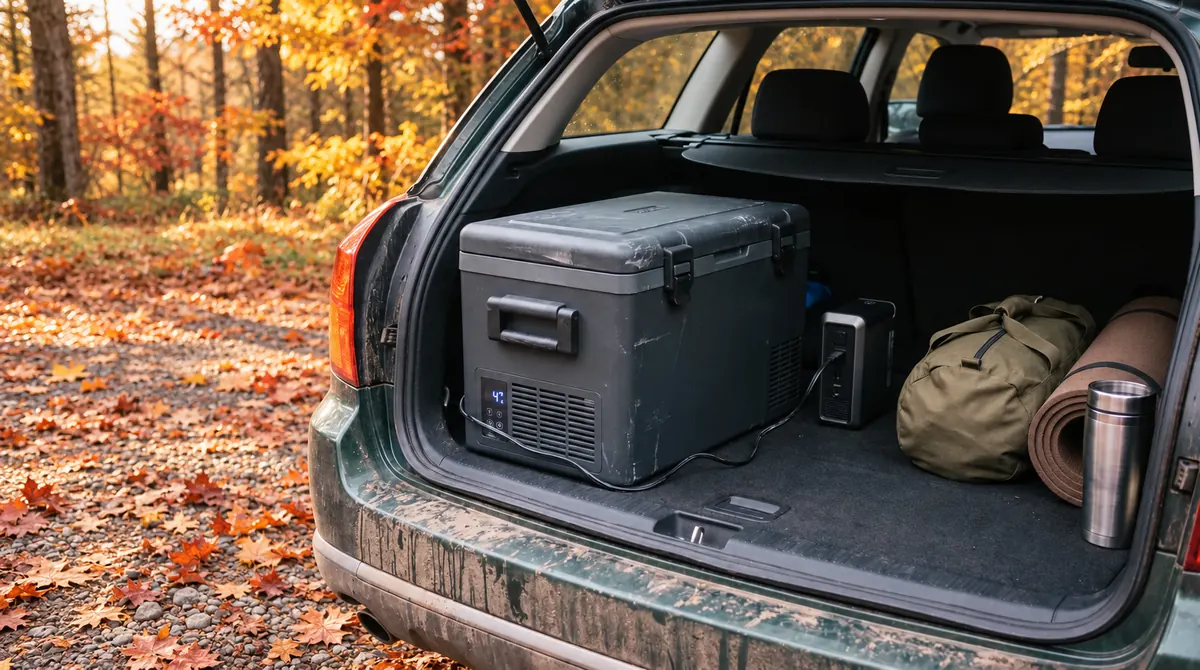
Overland Power: How to Keep Everything Running for a Weekend
Overlanding sounds like a driving problem. In practice it is an electrical one, and overland power is where most weekends come apart. The route rarely goes wrong — the fridge going warm on the second night, the phone dying with the maps on it, or the engine turning over slowly on Monday morning, those go wrong.
This guide covers overland power for a two or three night trip without carrying a generator or a second battery bank you do not need.
Key takeaways
- Add up watt-hours before you buy anything.
- Never run accessories off the starting battery.
- The fridge is 80% of your consumption — and the easiest to cut.
- Solar tops up over days, not hours. Leave with a full battery.
Work out what you actually draw
Everything is measured in watt-hours: watts multiplied by hours running. Do this once on paper and the rest of the decisions make themselves.
- 12 V fridge — 30 to 45 Wh per hour while the compressor runs, but it only runs about a third of the time. Call it 300–400 Wh a day.
- Phone and headlamp charging — 30 to 60 Wh a day for two people.
- LED camp lighting — 20 to 40 Wh an evening.
- Laptop or drone batteries — 60 to 100 Wh each charge.
A realistic weekend for two comes out around 500 Wh a day. Three nights is roughly 1,500 Wh. That number is the whole planning exercise.
The starting battery is not your house battery
This is the mistake that ends trips. A standard vehicle battery is built to deliver a large current for a few seconds, not a small current for two days. Draw it down below about 50% and you damage it permanently — and it will still be flat on Monday.
Keep the two jobs separate. The vehicle battery starts the engine. Everything else runs off something you brought for that purpose.
Portable power stations: the numbers that matter
These have largely replaced a fitted second battery for weekend use, because you can carry one out of the vehicle and charge it at home.
- Capacity (Wh) — match it to your daily figure. Around 500 Wh covers a night; 1,000 Wh covers a comfortable weekend for two.
- Continuous output (W) — must exceed whatever you plug in. A fridge is modest; a kettle is not.
- Chemistry — LiFePO4 lasts several times longer than older lithium-ion and copes far better with heat. It costs more and is worth it.
- Charging speed — how fast it fills from the vehicle while driving. If you cover ground each day, this matters more than solar.
The fridge is the biggest draw and the biggest saving
Two habits cut fridge consumption by a third, and neither costs anything.
First, chill it at home the night before, on mains power, and load it cold. A fridge cooling warm food from ambient works hard for hours. Second, keep it in the shade and leave an air gap around the vent — a compressor pressed against a hot panel runs constantly.
Set it to 4 °C rather than freezing unless you actually need frozen food. Every degree colder costs power all weekend.
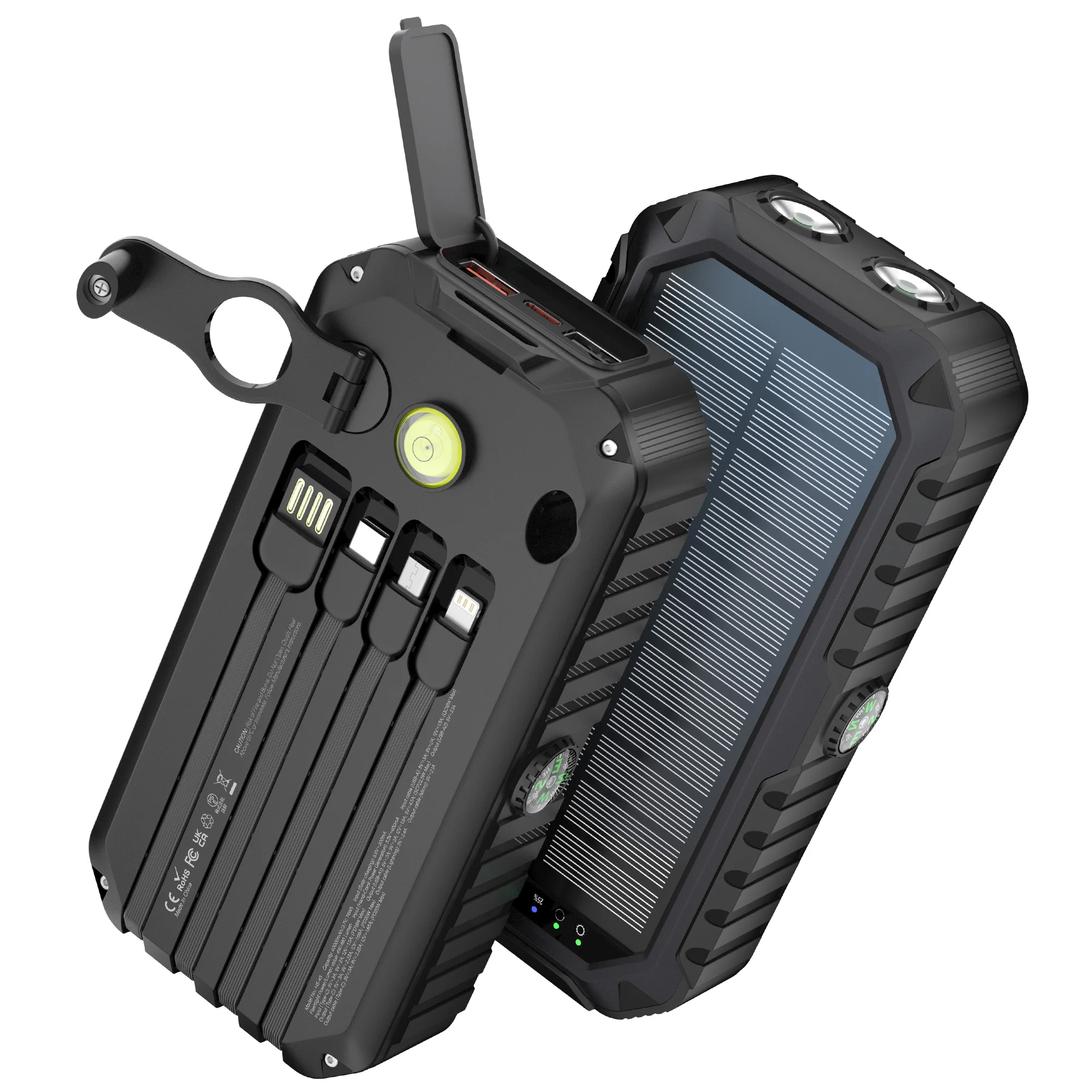
Solar in an overland power system: useful, but not a rescue
A 100 W folding panel in good conditions gives roughly 400–500 Wh across a full day. In tree cover, in winter, or with the panel flat rather than angled at the sun, expect half of that.
That makes solar a way to extend a trip, not to start one. Leave home with the battery full. Treat what the panel brings in as a bonus that buys you an extra night.
Getting home: redundancy, not capacity
Everything above assumes the engine starts. Keep that as a separate, boring, redundant system: know the age of your starting battery, keep the terminals clean, and carry a way to start the vehicle without another car.
A compact lithium jump pack lives in the door pocket and does nothing for years. That is the point. It is insurance, not equipment — and it should never be part of your daily power plan.
Charging your overland power while you drive
If you cover ground each day, the alternator is by far your fastest source of power — more than any folding panel will give you.
A standard 12 V socket usually caps out around 100 W, so an hour of driving returns roughly 100 Wh. A dedicated higher-current outlet, or charging through the vehicle port on the power station itself, can double or triple that. Two hours between camps can replace most of a day of use.
Worth knowing: many vehicles cut power to the accessory sockets when the ignition is off. That is usually a good thing — it stops you draining the starting battery — but it also means nothing charges while you sleep.
Cold weather changes your overland power numbers
Lithium cells lose capacity in the cold, and most refuse to charge below freezing even though they will happily discharge. A power station left in the vehicle overnight at -5 °C may show a healthy percentage and still refuse the solar panel in the morning.
Keep the battery inside the tent or the cab overnight in winter. Bring it up to temperature before expecting it to charge. And plan for perhaps 20% less usable capacity than the label suggests.
What you can leave at home
Most first setups are heavier than they need to be, and the extra weight is rarely the battery.
- An inverter, in most cases. If everything you own charges over USB-C, running 12 V to 230 V and back down wastes power in the conversion.
- A kettle or any heating element. Boiling water electrically eats a weekend of capacity in minutes. Gas does it for pennies.
- A second panel before you know what one actually delivers where you camp.
- Spare batteries for devices that charge over USB. One power bank covers them all.
Overland power: the parts that actually fail
Before anything else, treat the cells with respect: the CPSC battery safety guidance is the short version of why a swollen pack or a scorched connector never gets a second trip.
Not the battery. The connections.
- Cigarette-lighter sockets vibrate loose on rough tracks. A fridge that cuts out overnight is usually a loose plug, not a flat battery.
- Undersized cable drops voltage over a long run, and the fridge shuts off on low-voltage protection while the battery still shows charge.
- Fuses that nobody carries a spare of.
- Damp contacts after a wet night, particularly on cheap panel connectors.
Carry spare fuses, a short spare cable and a rag. That kit weighs nothing and fixes most of what goes wrong.
An overland power setup that works for most weekends
- A 1,000 Wh LiFePO4 power station, charged full before leaving.
- A 12 V compressor fridge, pre-chilled, in the shade with clear ventilation.
- A 100 W folding panel, angled at the sun and moved twice a day.
- Charging from the vehicle whenever you are driving.
- A jump pack in the door pocket that you never plan to use.
That covers three nights for two people with margin, and everything comes out of the vehicle and lives in a cupboard at home during the week.
Frequently asked questions
Can I run a fridge straight from the vehicle battery overnight?
One night, in warm weather, with a healthy battery, usually yes. Two nights is asking for a flat battery and a shortened battery life. If you do it, run the engine for a while in the evening.
How big a power station do I need?
Add up your daily watt-hours and multiply by the nights you want without charging. Most weekend setups land between 500 and 1,000 Wh. Larger is heavier and slower to recharge, not automatically better.
Is LiFePO4 worth the extra cost?
If you go out more than a few times a year, yes. It survives several times more charge cycles and tolerates a hot vehicle far better, which is exactly where these things live.
Do I need a dual battery system?
For weekends, usually not. A portable station does the same job, comes out of the vehicle, and does not require wiring. Fitted systems make sense when you are out for weeks at a time.
Where to look next
Overland power, recovery and storage for the vehicle live in Overland Gear. For what goes in the tent, see Camping.
If you are building a kit from scratch, our guides to choosing a sleeping pad and choosing a trail camera follow the same approach, or head back to the field notes.